
HDD tooling is a significant investment. A single set of drill pipe for a mid-size rig can represent thousands of dollars, and downhole tools like reamers and housings add thousands more. Proper maintenance not only extends the life of your tools but also prevents costly on-the-job failures — a stuck reamer or a cracked housing can turn a profitable bore into a very expensive problem.
Drill Pipe Inspection and Care
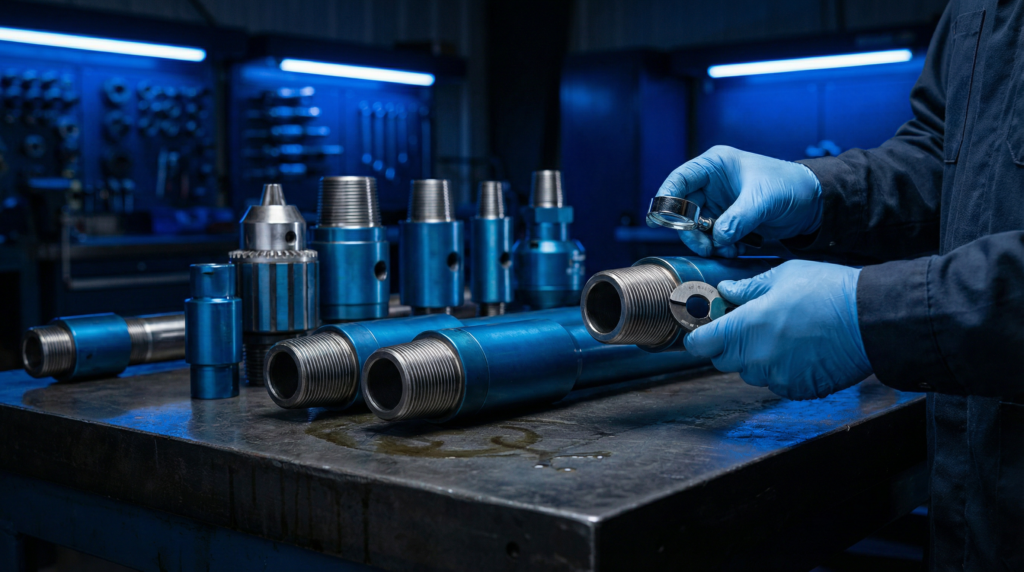
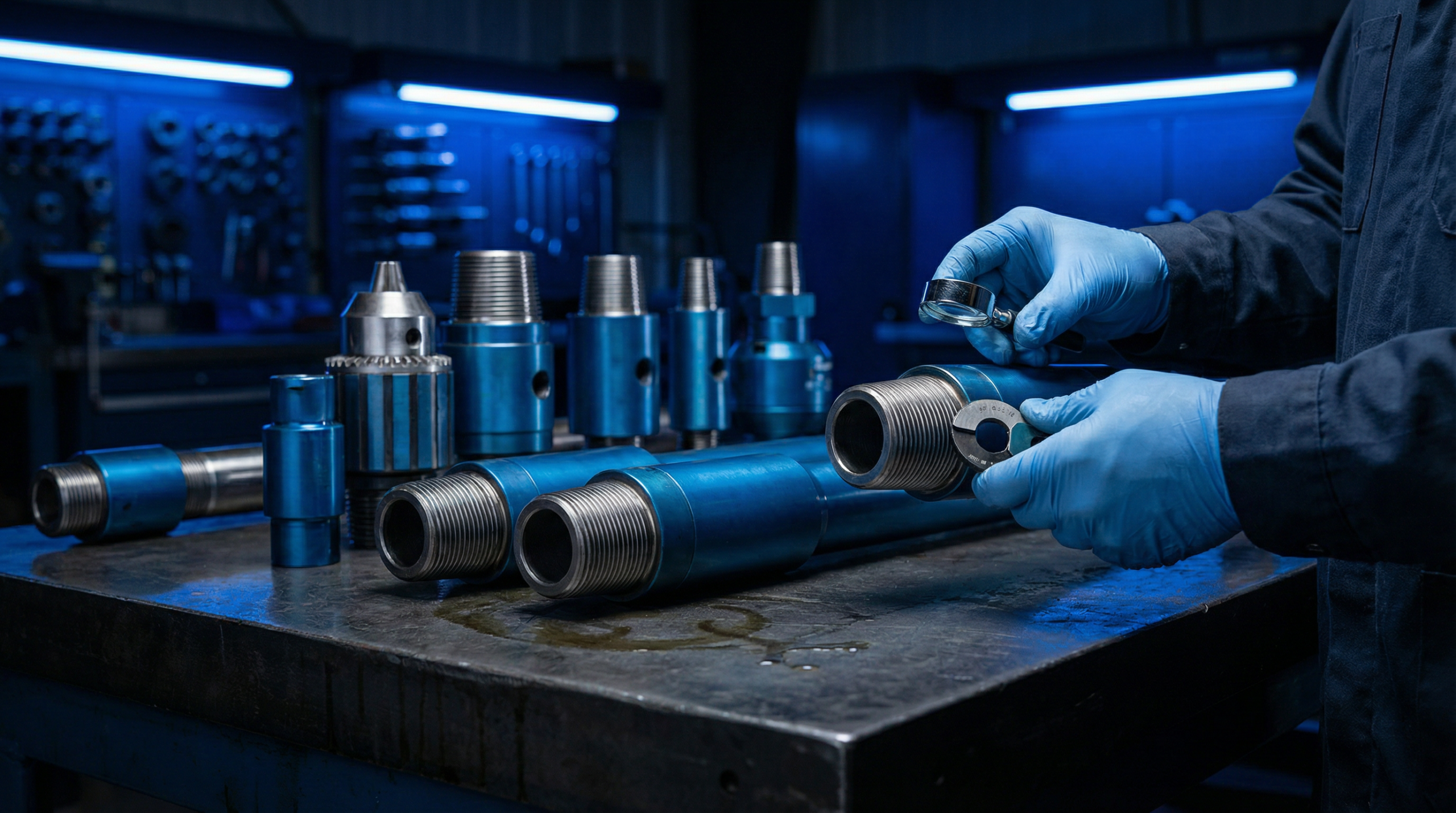
Drill pipe takes the most abuse on any HDD job. Every rod is subjected to bending stress, torsional loads, and abrasion from the bore wall. After every job, inspect each rod for the following:
- Thread condition: Check pin and box ends for galled, worn, or damaged threads. Even minor thread damage can cause a rod to back off (unscrew) in the bore — one of the most expensive failures in HDD.
- Body straightness: Roll the rod on a flat surface. Any wobble indicates a bent rod that should be removed from service.
- Corrosion: Surface rust is cosmetic; pitting corrosion on the tube body or threads is a structural concern.
- Hardbanding wear: If your rods have hardbanding (wear-resistant overlay on the OD), check for excessive wear that exposes the base metal.
Thread Lubrication
Always apply thread compound (pipe dope) to the pin threads before making up each connection. Thread compound prevents galling, ensures proper torque, and makes it easier to break out connections after the bore. Never run dry threads — even a single connection without compound can cause permanent thread damage. Use a compound rated for the thread type and size of your drill pipe.
Pilot Bit and Reamer Maintenance
Cutting tools wear faster than any other component in the drill string. After each bore, inspect your bits and reamers for:
- Carbide insert condition: Missing, cracked, or worn-flat carbide inserts significantly reduce cutting efficiency. Replace inserts or the entire bit if more than 20% of the inserts are damaged.
- Fluid port blockage: Clogged fluid ports prevent mud from reaching the cutting face. Clean ports with a wire brush and compressed air after every bore.
- Body wear: Excessive wear on the body of a reamer (especially on the OD) indicates it’s been run in abrasive conditions without adequate fluid. Consider upgrading to a carbide-protected body.
Swivel and Housing Maintenance
Swivels should rotate freely with minimal resistance. After each job, flush the swivel with clean water, apply bearing grease to the grease fittings, and check for axial play (end-to-end movement) that indicates worn bearings. A swivel that doesn’t rotate freely will transfer rotation to the product pipe during pullback — potentially damaging the pipe or the bore.
Sonde housings should be inspected for cracks, bent bodies, and damaged O-ring grooves. A cracked housing can allow drilling fluid to enter and damage the transmitter — an expensive repair. Always carry a spare housing on every job.
Need replacement tooling? Elite Underground Tools stocks drill pipe, pilot bits, reamers, swivels, housings, and all accessories for Vermeer and Ditch Witch rigs. Shop our catalog or call +1 (346) 504-0220.